This is one family’s quest for a better life. Jobs were hard to find. The sons of Floyd Wallace were each trying to find financial stability. Floyd was fresh from Bartle, Cuba, after founding the family sawmill, then overseen by Jesse.
Anson Newell Crosby, a chiropractor from Monroe, Wisconsin, was Floyd’s half-brother. He learned of land in the West, basically free after five years of residency. Anson approached Floyd and George about dry-land wheat farming in Montana. That started a 43-year adventure in southeastern Montana.
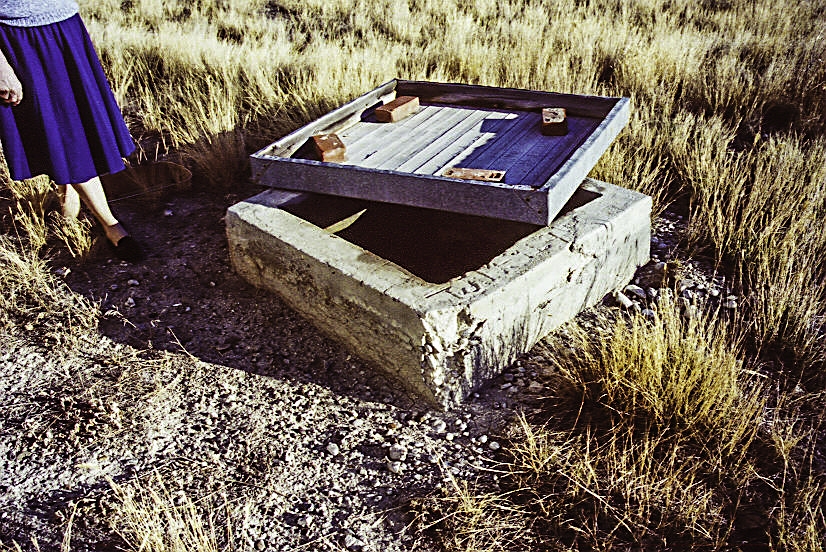
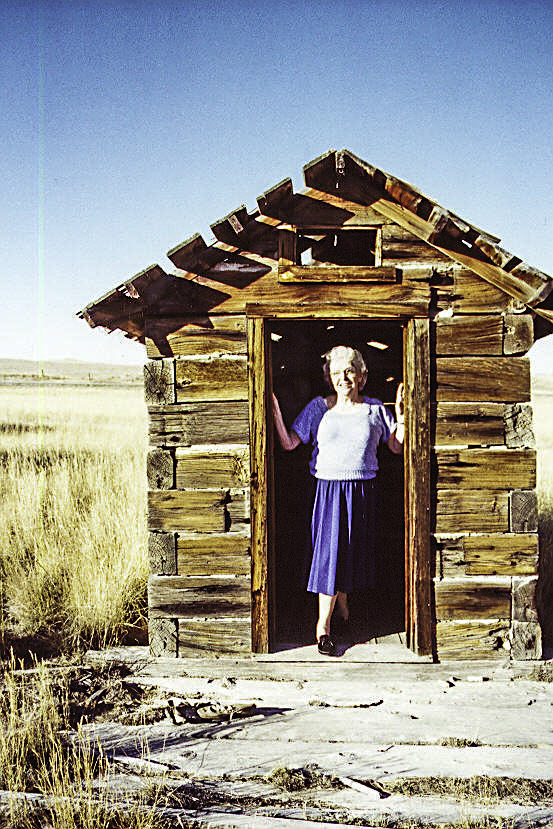
The story begins with a 12-by-14 camp house: no windows, one door, no running water. Anson, Floyd, and George lived there while they worked the ranch. It became home for Floyd and Charlotte in their late sixties. Hard duty. In their letters they seemed more than content.
Two deaths in early 1919 nearly ended the enterprise. George’s resolve kept it going. Larry wrote that reading George’s own words in The Family History of George Francis Crosby is chilling and inspiring.
Epilogue — George Francis Crosby
Carol and Larry went back to Montana in June 2018 to visit Minnie Eileen (age 93, daughter of George), LaDonna (age 81, granddaughter), and Darlene (age 79, daughter-in-law).
George came from a family of many talents — entrepreneurial, skilled in practical trades, willing to take risk, inventive, mutually supporting. At his death he had about 2,500 acres. Everything was mortgaged. Hail wiped out crops. The 1918 flu. Stolen crops. The house burned. He died at 73 when his tractor rolled over on him. He lived in substandard housing his whole life.
From the three women: he was greatly influenced by religion — church Wednesday evenings and all day Sunday, and the family had to go. He was a friend to everyone. He was particular and precise. He stuck to what he thought worthwhile. Profit was not the motive. He would rather experiment than plant the crop that paid best.
His older brother Clarence, though not a landowner, had two of the same marks — religion, and principle ahead of profit. George was an honorable man. He put his reading of religion and family above all else.
Youngest son Floyd Andrew and wife Darlene were willing to make a living off the property. When George died in 1960, the dream died with the debt and pressure from siblings to abandon the ranch to pay it.
From 1917 to George’s death in 1960, the Crosbys of Toluca lived that dream for 43 years.
Larry Allen Crosby, July 17, 2018.
From the family history
In the summer of 1917, after a visit with Anson in Monroe, Floyd and Charlotte told George that Anson wanted to talk about Montana. On May 2, 1917, Floyd, Anson, and George boarded a train for Toluca — “on their way to another pioneering adventure of which my father was very fond,” George wrote.
They built the camp house. George bought an Emerson-Brantingham tractor and a three-bottom plow. Floyd built fence. The country was badly infested with prairie dogs. It took much poisoning to clear them. By fall George had 180 acres plowed. He hired a neighbor to seed. He left on October 23 for Zion, Illinois, where his family was staying. “Both Father and Mother liked Montana extremely well and decided to stay over for another season. When the weather got a little too cold for comfort in the camp house they went to Billings for the winter.”
George worked the winter in Illinois, sold his home and furnishings in Zion, and left July 1, 1918, in a five-passenger Overland. “After thirteen days on the road, or trail, as lots of it was in that day, with no road maps to go by, and nothing more serious happening than several blowouts, we arrived safely at Toluca.”
The camp house was too small. They built a 16-by-32 summer shed, paid for by Uncle Anson. Fourteen ranches in the area used work-labor agreements to get the harvest in. Before Christmas they rented a house in Billings. Sister Bertha came and lived with them while she was in stenographer school.
That was the winter of the influenza. About ten days after they arrived, all six of George’s family came down at once. The family who had been in the house before had all been sick. Two of them had died there. Olo Crosby, mother of four, died in the hospital on January 12, 1919. Floyd and Charlotte had mild cases. Floyd was then diagnosed with liver cancer and died in Billings on April 5. Sister Nellie took George’s youngest, Evelyn, age five, to Detroit after the funeral.
Those who survived went back to the A. N. Crosby ranch in April. Charlotte stayed through the summer to help with the three children. In July George bought one of the first three International Harvester combines in the area. Brother Howard came from Cuba to work. They built a house and moved in by early fall. Hail ruined the wheat that was ready for the new combine.
George worked until dark. Oldest daughter Lois ran the house and the younger children. He hired a live-in housekeeper, then went to Detroit at Christmas to see Evelyn. The family preferred someone they knew. They asked an old Midwest friend, Minnie Packard, to come for a year. She arrived in Billings on June 8, 1920. George married her on March 2, 1921. Evelyn came home. Charlotte returned in the fall of 1921 and stayed until after Roland was born on December 10. Three more children were born to George and Minnie: Minnie Eileen in 1923, Charlotte Jane in 1925, and Floyd Andrew in 1929. Minnie’s father came to live with them in 1928.
In 1930 George bought his own ranch just south of Anson’s and grew alfalfa seed. They eventually held 2,782 acres. In 1958 the old log house burned, taking most of the family possessions. Floyd and Darlene came back to help build a new house and run the ranch. George died October 17, 1960, doing what he loved — working the ranch. After his death the ranch was sold. This branch was well established from Montana to Spokane.
Land and dates
Land records are at the Big Horn County Courthouse in Hardin, Montana. A short list from the old place page:
- 1916
February 17 — Anson buys 320 acres near Toluca for $8,262.
- 1917
May 2 — Anson, Floyd, and George leave Zion by train. Fall — 180 acres ready. October 23 — George goes back. Floyd and Charlotte stay.
- 1918–1919
July 1 — George’s family leaves Zion. December — flu in Billings. January 12 — Olo dies. April 5 — Floyd dies. August — hail. October — house finished.
- 1920–1929
Minnie Packard arrives June 8, 1920. Marriage March 2, 1921. Children 1921–1929. 1925 — 640 acres bought in Minnie’s name for $500.
- 1937–1949
More leases and purchases, including 640-acre tracts for $1 under indenture agreements with the bank and the county.
- 1954–1957
Anson dies in Monroe, Wisconsin, July 1954. Dora E. Shank Crosby files the estate and later a royalty and warranty deed on Anson’s land.
- 1960–1961
October 17 — George dies of heart failure after a tractor rollover while working on a dam. 1961 — ranch sold.
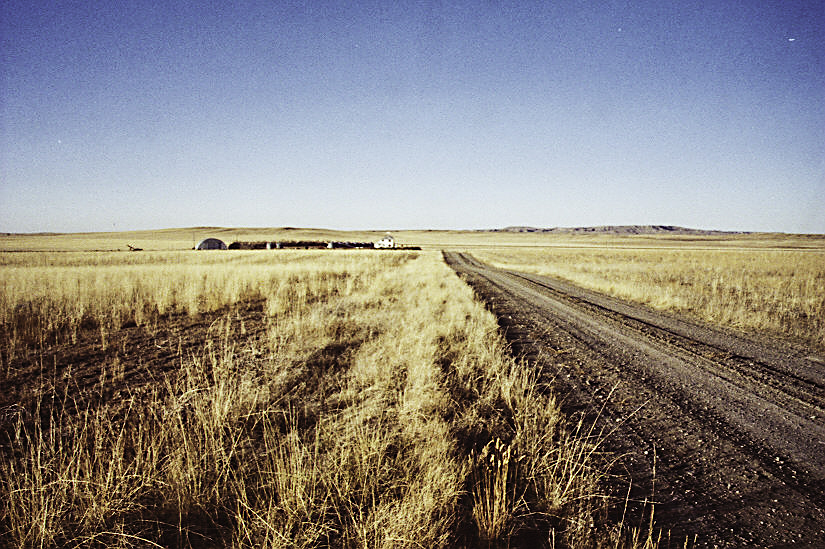
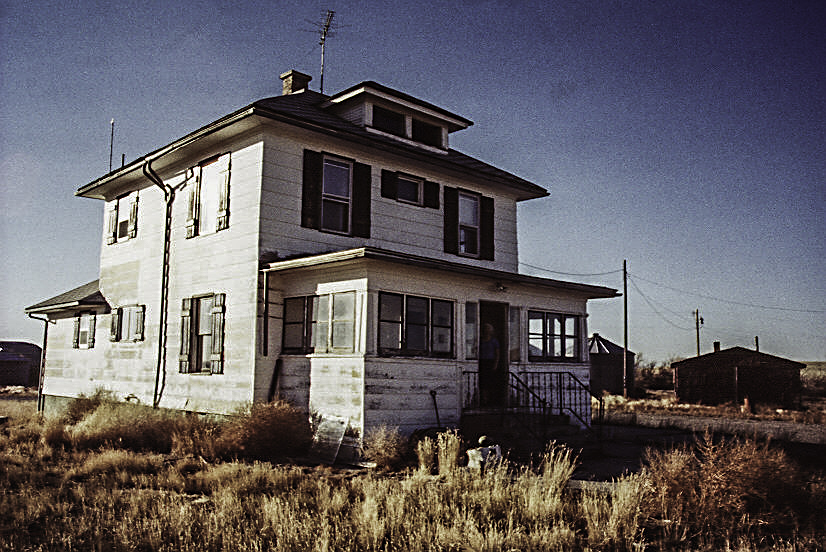
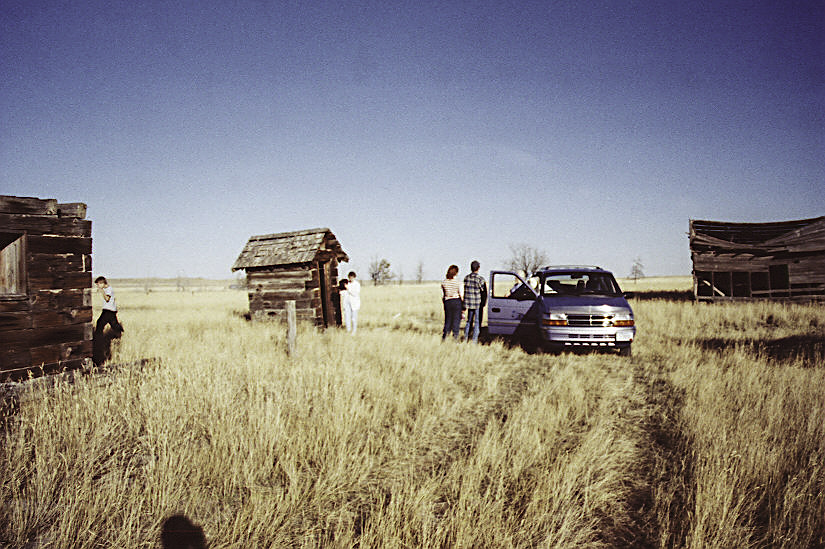
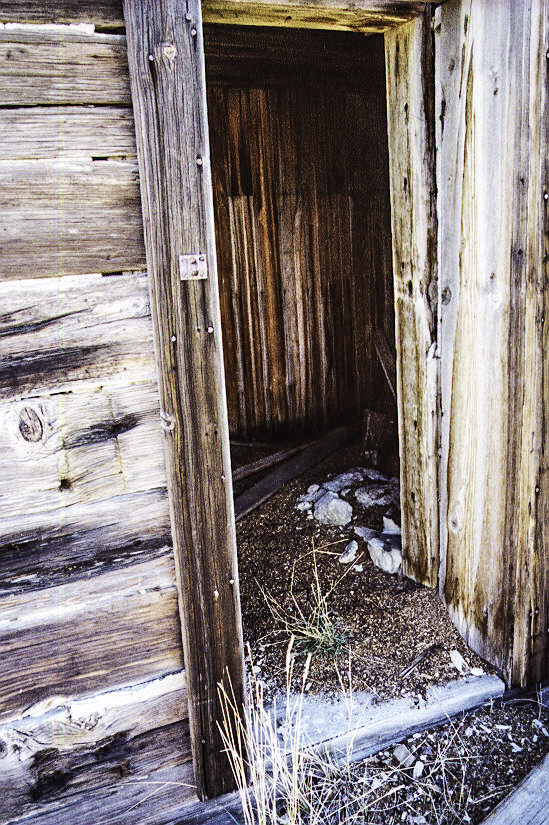
The ranch about 2000
These photographs are later visits to the ranch, not 1917 family portraits.